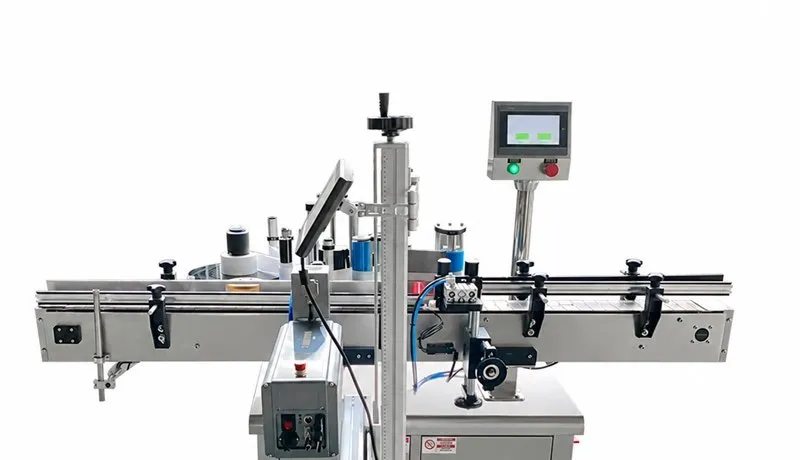
Honey jar labeling machine
Labeling machine (wrap-around)
Our wrap-around labeler for honey and glass jars, including hexagonal jars. It covers the labeling station of a jar line.

[Complete filling lines]
Plan a filling, capping and labeling line around your product, container, target output and floor space. Settle the stations and the scope before you ask for a quotation.
[01]
A filling line is a chain of stations: container handling, filling, capping, labeling and, where needed, coding and inspection. The product is what changes the chain. Thin liquids, pastes and small-batch work each push the design a different way.
[02]
Every line is configured to your product and container and built to order. The table shows the usual split between included, optional and customer-supplied stations, and your proposal sets the final list.
Bottles or jars reach the conveyor by hand or through an unscrambler. Round, stable containers feed easily; tall, light or oddly shaped ones need more thought.
Product sits in a tank above or beside the filler. Whether it needs heating or stirring depends on the product.
The filler type follows from viscosity, foaming, particles and the container opening.
Screw, lug, flip-top or pump closures are fed, placed and tightened.
Wrap-around, flat-surface, multi-side or sleeve labeling, depending on the container shape.
Inkjet or laser coding, plus checks for fill level, cap presence or label presence, when your product and market call for them.
Boxing and stacking are separate machines. We agree the interfaces so they can be added now or later.
Cooking, blending and similar processing happen before the product reaches the line. They are not part of it.
You prepare power, compressed air, drains, floor condition and access on site.
[Scope]
Every line is configured to your product and container and built to order.
[03]
Each application page covers what is specific to that product: honey that crystallizes, sauces with particles, oils that drip, shampoo that foams.
[04]
Two choices change a line more than any other: how containers are loaded and how labels are applied. The comparison is qualitative.
| Aspect | Operator-fed line | Unscrambler-fed line |
|---|---|---|
| Container loading | An operator places containers on the infeed conveyor. | An unscrambler orients and delivers containers without handling. |
| Fits when | Batches are small, formats change often or space is tight. | Containers run continuously and the operator should not be tied to the infeed. |
| Interfaces to plan | Infeed height and a place to stage containers. | Container shape that can be oriented reliably, plus a feed hopper and its refill route. |
| Labeling choice | Wrap-around labeling suits round bottles and jars; flat-surface labeling suits square or flat sides. | Same labeling choices apply; multi-side labeling is added for square bottles that need more than one label panel. |
| Later expansion | Can add an unscrambler, coding or inspection later if the layout leaves room. | Can add downstream packing once the line is running steadily. |
[05]
We can only propose output and layout from facts about your project. Have these ready before you ask.
[06]
Our products in and around a complete line. Several are end-of-line labelers; the others fill and seal. Each card links to its product page.
Labeling machine (wrap-around)
Our wrap-around labeler for honey and glass jars, including hexagonal jars. It covers the labeling station of a jar line.
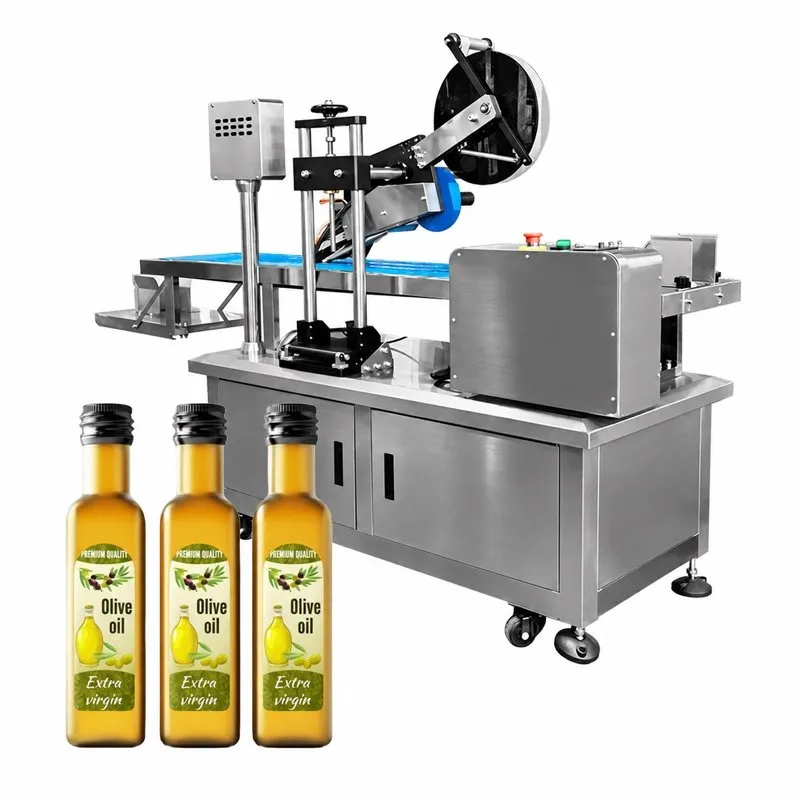
Labeling machine (flat surface)
Our labeler for square PET and glass oil bottles, with pressure rollers meant for oily surfaces.
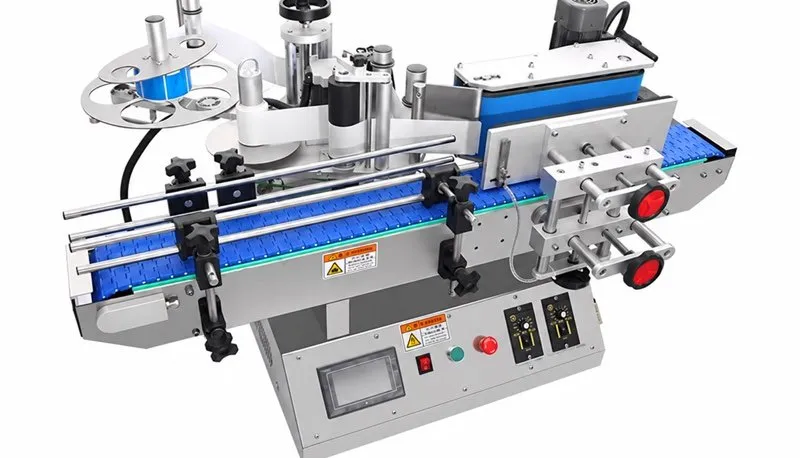
Labeling machine (tabletop)
Our labeler for flat and oval personal care bottles, aimed at wrinkles on large labels.
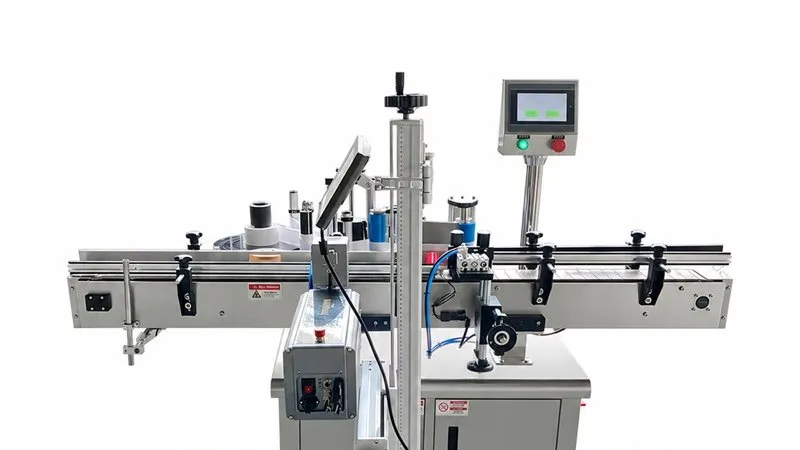
Labeling stage (wrap-around)
Our line page lists volumetric filling together with labeling for sauce bottles. We go into filler details once we know your sauce.
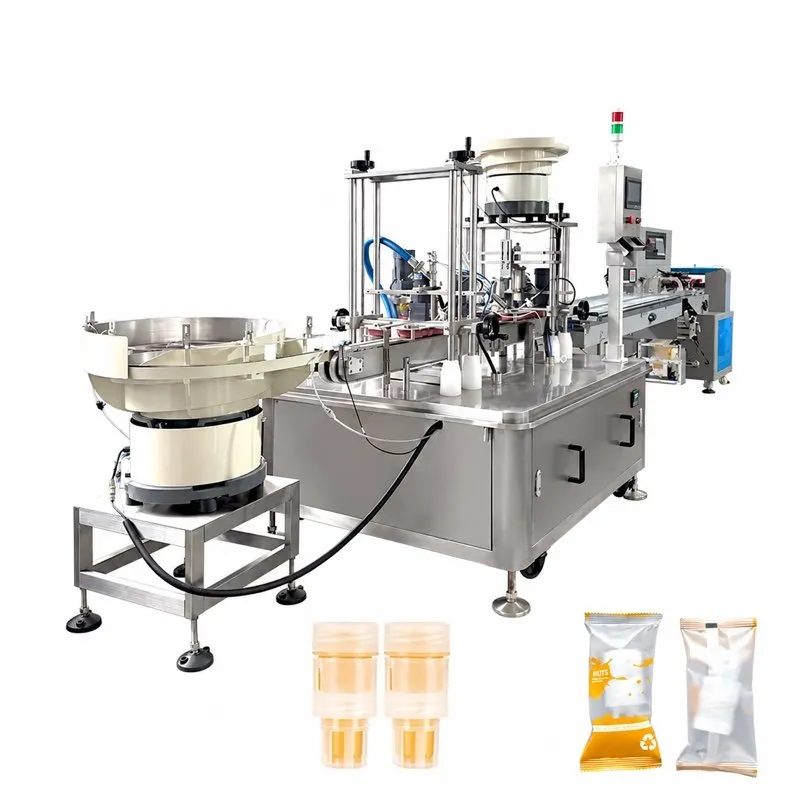
Fill-seal line (closure cavities)
Doses honey into closure cavities and seals them with foil. It's a different format from bottles and jars, and we show it as an example of viscous dosing.
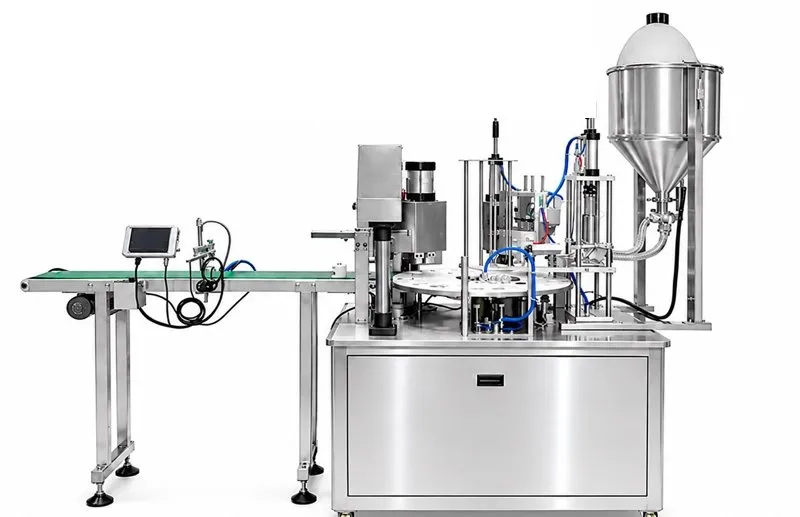
Fill-seal machine (cups)
A rotary machine that fills preformed cups with servo piston dosing and seals them with foil.
[07]
We configure and build each line to order around the agreed product, container and output. The proposal says which stations are included, which are optional and which you provide.
Installation and training are described on linevopack.com. A site readiness check comes first: layout drawing, utilities, upstream and downstream equipment. On site, the machine is positioned and leveled, power and air are connected, and the line runs empty, then with product. Acceptance settings are recorded. Training covers operators, maintenance staff and supervisors, and a handover record closes the job. Remote support is optional.
Spare parts come from a recommended list issued with the quotation. Seals, O-rings, pistons, nozzles, belts and sensors are the usual wear items. A new container or label can also need new guides or holding parts.
This site lists no customer names or installation references, and contracting details are in your quotation. The filling line cost guide shows how to compare quotations on the same scope.
[08]
Read these before you ask for a quotation, or skip ahead and send the RFQ checklist details.
[Request]
Send your product, container, target output and country. We'll reply on WhatsApp with the questions that matter for your line.